
Dial-A-Tune Reborn: The Resurrection of Dick Price
The late cult songwriter who ran a daily phone line of original tunes finally goes global.
By Martin Chait
Before Napster, before Spotify, before Austin got weird enough to trademark it, there was a guy named Dick Price with a piano, a cassette deck, and an answering machine. For nearly twenty years, you could call his “Dial-A-Tune” number and hear a brand-new song every day — funny, fearless, and heartfelt, often all at once. His melodies were earworms in the best sense: deceptively simple, sly, and hard to shake.
More than 200 of his self-recordings have been remastered and reorganized into 22 albums, EPs, and singles. Together, they gather a body of work that once circulated through phone lines, homemade cassettes, and word of mouth, revealing just how extensive — and oddly cohesive — Price's catalog always was.
It's a loving archival rescue that finally puts him where he’s always belonged: right in the middle of Austin’s long, strange musical story. Think They Might Be Giants crossed with Randy Newman, Loudon Wainwright III, The Magnetic Fields, and Tom Lehrer — all in a basement mixing up the medicine with a piano — and you’re somewhere near Price. Add his love of cinema, and you’re even closer.
Born in 1951 and raised in Waco, with a degree in psychology from the University of Texas at Austin, Price began writing songs at age 27 after moving to New York City, where he formed the Dick Price Combo. After returning to Austin, he played solo in local clubs, building a loyal, almost conspiratorial fanbase through his Dial-A-Tune phone service and by handing out cassettes of his songs to just about everyone he knew. His following grew with airplay on The Dr. Demento Show, a trio of experimental theater productions spun from his music, and appearances on public-access television. Despite composing more than 600 songs, Price remained a private, unpretentious artist who preferred to let the work speak for itself rather than seek the spotlight.
Trying to pin down Price’s music is nearly impossible. One minute he’s a satirist, the next he’s disarmingly sincere — sometimes outright funny, sometimes deeply melancholy — and somehow it all fits. His songs veer from the comically absurd to the boldly provocative, with moments of genuine tenderness and heartbreak. They explore quirky characters and surreal scenarios, shaped by a distinctly cinematic imagination, inviting the listener to laugh, think, and occasionally feel a bit uneasy.
In a city famous for its musical legends, Price lived just outside the frame — too funny for the folk scene, too literate for the novelty bin, too sincere to be dismissed as a joke. But that’s what makes his work feel so modern. In an era when artists can record entire albums in a bedroom and still find an audience halfway around the world, Price seems like a prophet of DIY intimacy, years ahead of his time.
Austin has always had room for the true originals — the beautiful misfits, the ones who lived somewhere between the laugh and the ache. Price belongs in that company not because he wanted to, but because he couldn’t help it. His songs were postcards from his own peculiar planet, written in melodies that still hum with life.
Listening today, the sound quality may be lo-fi, but the spirit is crystal clear. What comes through isn’t nostalgia, but presence — the feeling of an artist still reaching out, still amused by the world’s absurdity, still trying to make sense of it one rhyme at a time. And maybe that's the best kind of legacy: not fame or fortune, but songs that continue to find their way into other people's lives.
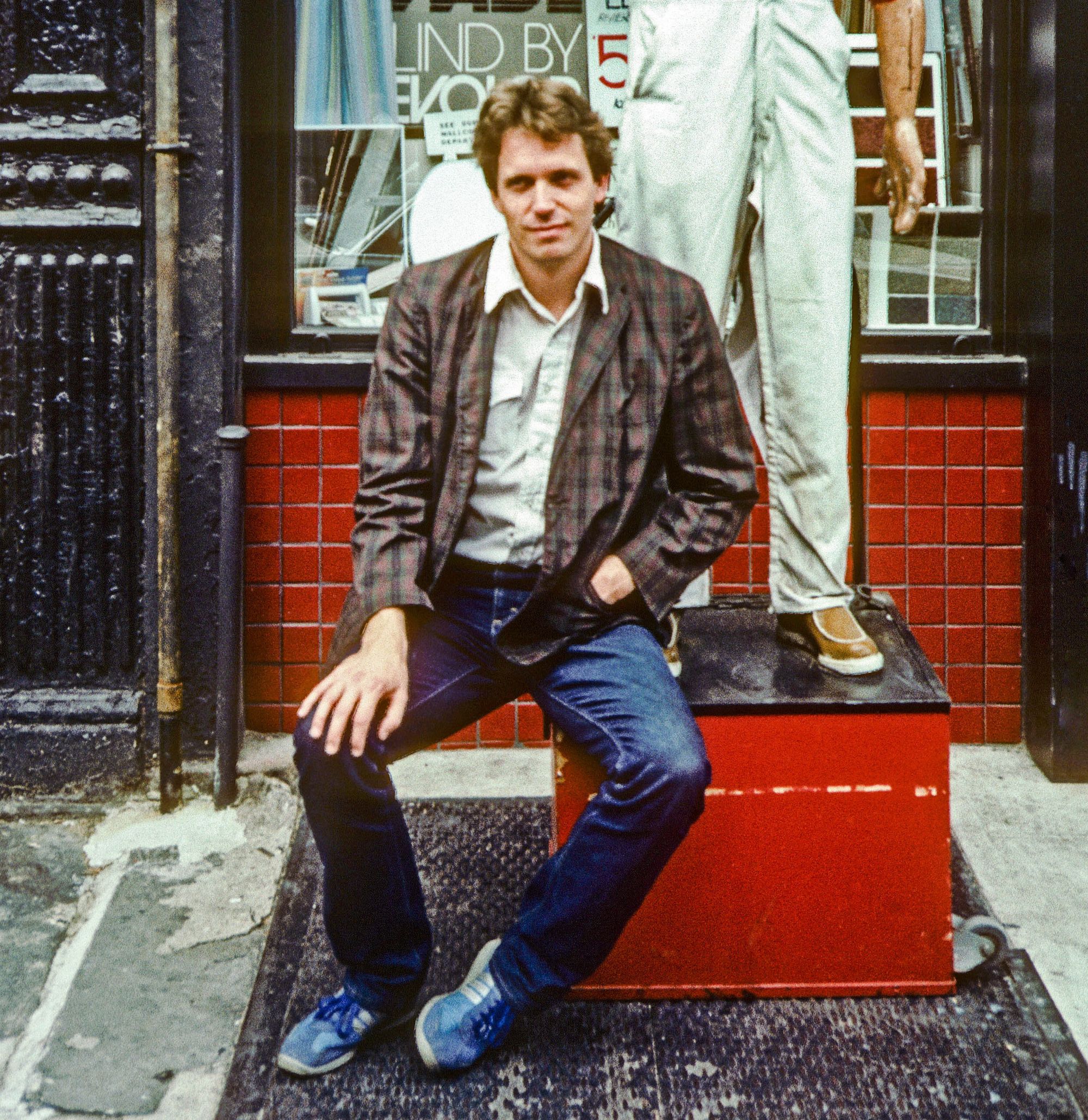
New York City — October 1983